

黑色空間的意外驚喜──台北住宅的光影實驗
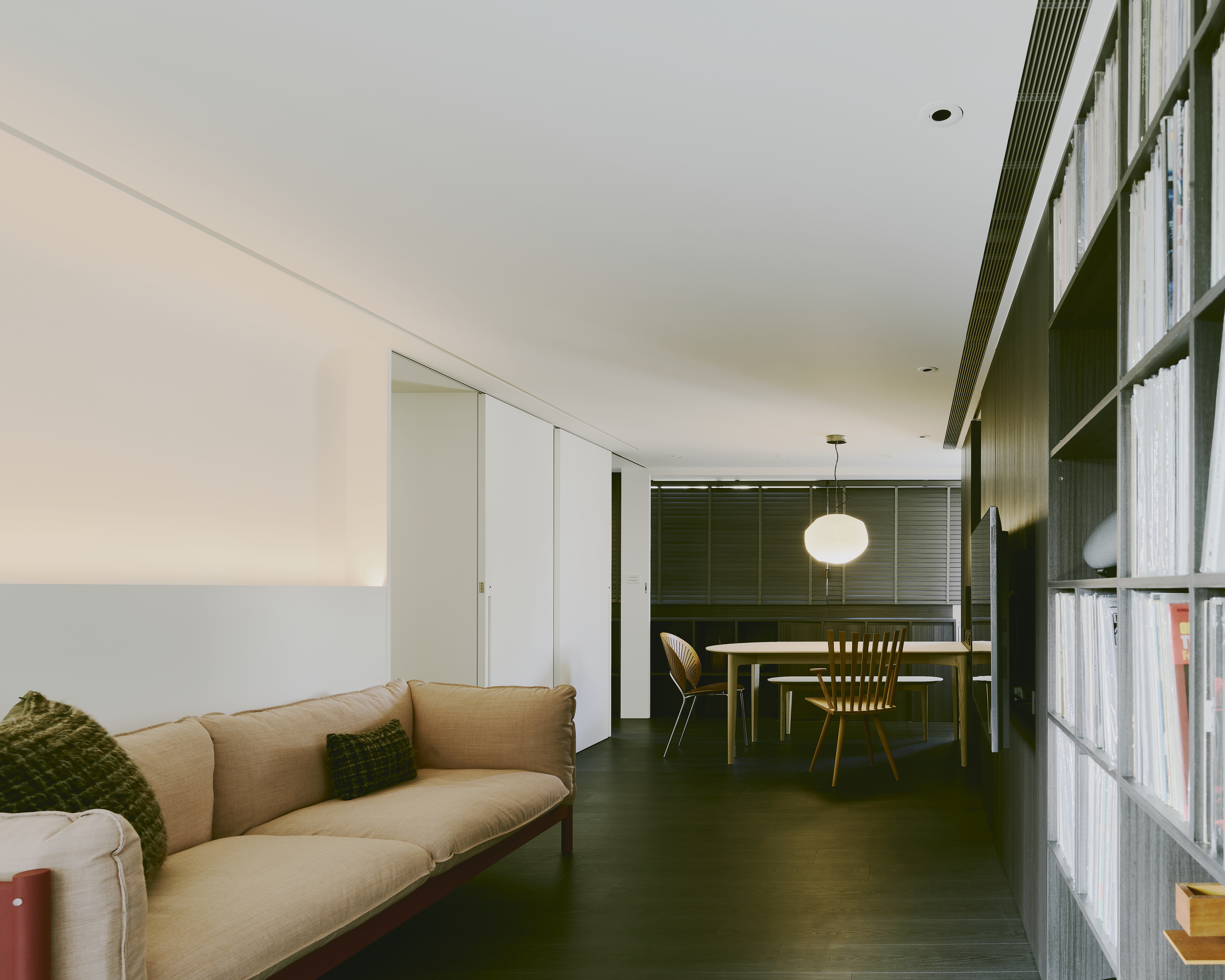
位於台北市的一處住宅,我們這次挑戰了許多人避之唯恐不及的「黑色空間設計」。這次改造以深色調為主軸,在極佳的自然採光條件下,反而創造出出乎意料的明亮與層次感。黑色不再是壓抑與封閉的代名詞,而是一種能與日光共存的靜謐底色。陽光穿透大片窗面,在牆面與木質表面之間反射、滲透,形塑出深邃而安定的空間氛圍。
在燈光設計上,我們以「日光為主、人工光為輔」的概念貫穿整體。客廳與餐廳的照明巧妙融合自然光,即使天花板結構高低不一,燈具仍以精準的對稱配置達到視覺平衡。這套光環境設計延續設計團隊一貫的「見光不見燈」精神,讓使用者在不察覺燈具存在的情況下,仍能感受柔和卻足夠的光線覆蓋。即便在陰雨天,仍能透過局部光源維持舒適明亮的生活氛圍。

此案的空間規劃同樣充滿創意。設計師運用厚實木牆作為核心結構,將原本的開放空間巧妙分隔為兩個可獨立使用的房間,達到兼具私密與彈性的布局。無論是一人獨處或與朋友共享,都能讓空間在合併與分隔之間靈活轉換。


在控制系統上,這間住宅刻意捨棄智慧化照明方案,以一套「類比思維」的燈光控制系統取而代之。設計師希望讓居住者透過簡單直覺的操作感受光線變化,同時保留預算添購更多個性化的家具或音響設備,如黑膠唱盤等質感物件。這樣的選擇,讓整體空間更貼近真實生活的節奏,也體現極簡卻不失細節的生活哲學。
最終,這個結合了黑色調、自然採光與簡約照明的住宅,呈現出一種輕鬆而不造作的生活態度。光與影在空間之間遊走,使每個角落都成為時間靜止的景深。這正是當代台北住宅設計中,最值得玩味的一種美學實驗。

空間設計: Marvelous Studio 馬福樂思工作室
燈光設計: UNDERLiiGHT
The Unexpected Charm of a Black Space — A Light and Shadow Experiment in a Taipei Residence
Located in Taipei City, this residence takes on a bold challenge that many designers tend to avoid — the design of a black interior space. In this renovation, dark tones serve as the main visual theme. Yet, thanks to the home’s abundant natural light, the atmosphere feels unexpectedly bright and layered. Black here is no longer a symbol of heaviness or enclosure, but a calm and contemplative backdrop that coexists beautifully with daylight. Sunlight filters through large windows, reflecting and diffusing across the wooden surfaces and walls, creating an ambience that is both profound and serene.
The lighting design follows a concept of daylight first, artificial light second. In both the living and dining areas, illumination is skillfully integrated with natural light. Even with the ceiling’s varying heights, the carefully symmetrical arrangement of fixtures achieves visual harmony. This lighting scheme continues our design studio’s hallmark philosophy — seeing the light, not the fixture. Users can enjoy soft yet sufficient illumination without noticing the light source itself. Even on cloudy days, localized lighting ensures the space remains bright and comfortable.
The spatial planning also demonstrates creative ingenuity. A thick wooden partition serves as the core structure, subtly dividing an open-plan layout into two flexible rooms. This design balances privacy and openness, allowing the area to transform seamlessly between shared and independent uses — perfect for both solitude and social gatherings.
Interestingly, the lighting control system in this project is intentionally analog. Instead of adopting a smart-home setup, the designer implemented a simple manual system that responds to the residents’ daily gestures. This approach invites a more tangible interaction with light and frees the budget for personalized lifestyle touches — like a vinyl turntable or finely crafted furniture. The result is a home that feels grounded, genuine, and beautifully minimal without sacrificing warmth or individuality.
In the end, this Taipei residence — blending black tones, daylight, and understated illumination — embodies a relaxed yet sophisticated living attitude. As light and shadow move through the space, every corner becomes a quiet frame in time, capturing the poetic essence of modern residential design in Taipei.