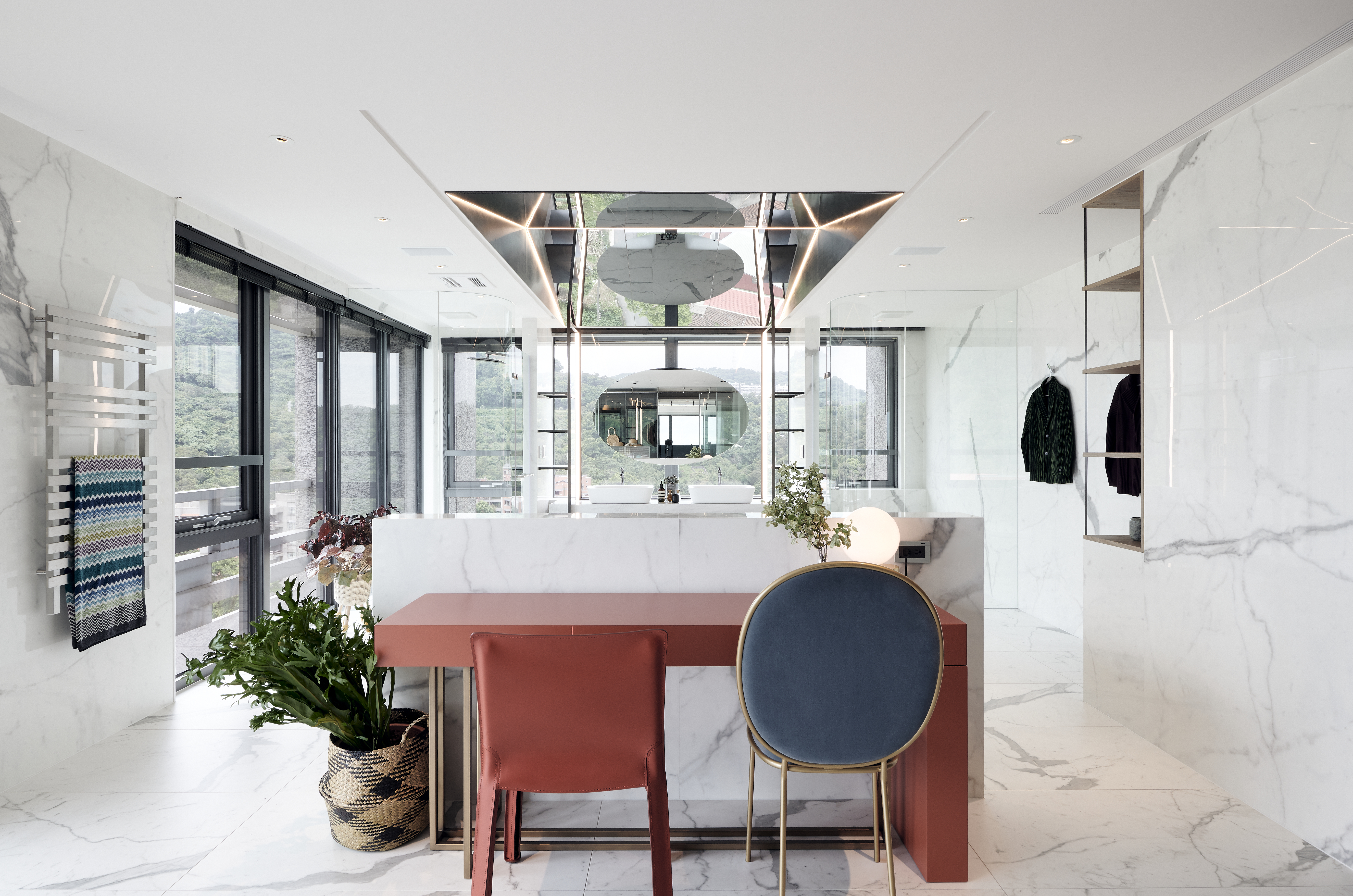

在現代住宅設計中,「雙拼住宅」成為越來越受歡迎的居住類型。這個位於台北河濱都會區的雙拼住宅案例,由一對年輕夫妻與長輩共同居住,空間以對稱佈局規劃,兼顧共享與獨立的生活方式。透過專業的燈光設計策略,兩側住宅得以在視覺上彼此串聯,同時保留各自的舒適與隱私,呈現現代「跨世代共居」住宅中光線運用的最佳示範。
年輕夫妻的住宅一側以氛圍為主,藉由自然光延伸出開闊的空間感,突顯材質的細膩層次與生活氛圍;而長輩的住宅空間則運用暖色光與柔和照明,營造安全、安定且放鬆的居家氣氛。設計挑戰在於當兩側客廳互通時,如何讓整體亮度過渡自然,避免視覺上出現明顯的亮暗落差,同時確保居住者都能維持各自熟悉的光環境舒適度。


在客廳的照明設計中,設計師導入多層次控光概念,主光源以一致色溫調性設定,再輔以可分區控制的間接照明。當雙邊客廳打開連通時,光線柔順融合成連續的共享場域;而分開使用時,則能自動回到獨立照明需求。這樣的「動態光平衡」讓光線不只是機能,而是家族成員之間情感與互動的橋樑。


沿著客廳通往主臥的動線,燈光語彙又發揮出導引作用。年輕夫妻的區域亮度隨動線逐漸下降,從社交區的明亮過渡到臥室的沉靜,強調夜間放鬆的氛圍。而長輩臥室則採用高亮度、柔光質感的設計,確保閱讀、起居皆舒適安全。這樣的照明調性轉換,不僅解決了跨世代生活習慣差異,也展現出專業燈光設計在居家幸福感上的關鍵角色。
一個好的住宅,往往決定於光的細節。從明亮到柔和、從共享到安定,專業的住宅燈光設計能讓不同世代在同一屋檐下找到各自的節奏與平衡,讓家在每一個時刻都美而溫暖。


空間設計:森之國際設計有限公司
燈光設計:UNDERLiiGHT
In modern residential design, “duplex housing” (or dual-unit homes) has become an increasingly popular living typology. This case study features a duplex residence located in Taipei’s riverside metropolitan area, where a young couple and their elders cohabitate. The architecture employs a symmetrical layout to balance shared and independent lifestyles. Through professional lighting design strategies, the two sides visually connect while preserving individual comfort and privacy, exemplifying optimal light usage in contemporary “multigenerational co-living” homes.
The young couple’s side prioritizes ambiance, extending natural light to create an open spatial feel that highlights material textures and daily living vibes. In contrast, the elders’ space uses warm-toned lighting and soft illumination to foster a sense of safety, stability, and relaxation. The key design challenge arises when the two living rooms connect: achieving a seamless brightness transition without stark light-dark contrasts, while ensuring each group maintains their preferred visual comfort.
In the living room lighting, the designer implements a multi-layered dimming concept, with consistent main light sources tuned to a uniform color temperature, supplemented by zoned indirect lighting controls. When the dual living rooms open to connect, light blends smoothly into a continuous shared domain. When separated, it reverts to independent settings automatically. This “dynamic light balance” elevates light beyond mere function, serving as an emotional bridge for family interactions.
Along the pathway from living room to master bedrooms, lighting acts as a guiding narrative. In the young couple’s zone, brightness gradually fades from the social area’s vibrancy to the bedroom’s tranquility, emphasizing nighttime relaxation. The elders’ bedroom employs high-brightness, soft-quality lighting to ensure comfort for reading and daily activities. Such tonal transitions resolve multigenerational habit differences, underscoring professional lighting design’s pivotal role in enhancing home well-being.
Ultimately, a great home hinges on light’s nuances. From bright to soft, shared to serene, expert residential lighting design harmonizes generations under one roof, letting every moment feel beautiful and warm.